was successfully added to your cart.

Cart

Tag

Scripture Archives - Page 2 of 5 - Firestorm Ministries, International

EPHESIANS – LESSON 4 (CHAPTER 3) – 12/07/19

LESSON 4- Ephesians

Chapter 3

The Mystery- Revelation

Our Inheritance in Christ Cont.’

Chapter 3:1-21

Eph. 3:20 Now to Him who is able to do exceedingly abundantly above all that we ask or think, according to the power (dunamis, authority) that works in us,21 to Him be glory in the church by Christ Jesus to all generations, forever and ever.  Amen.

3:20 We celebrate Him who super charges us powerfully from within. Our biggest request or most amazing dream cannot match the extravagant proportion of His thoughts towards us. Mirror Translation


A close up of a signDescription automatically generated

Now unto him that is able” God the Father is the author of the plan for the Christian’s growth. God knew all about human IQ, and He knew what IQ every person would have. He decided not to use any of it and designed a grace plan for spiritual perception that would depend on the Holy Spirit’s teaching ministry rather than a person’s ability to understand in the soulish/sense realm.
“to do exceedingly abundantly above” – a double adverb meaning “beyond all measure;(infinity) infinitely more than”. This is the highest form of comparison in New Testament Greek. o768
God is able to do what we cannot do, beyond anything that we can ask, think or imagine.

“all that we ask or think” – Prayer will not produce BLESSINGS. (they are freely given, overtaking us Deut. 28:2a)

And it’s far beyond what the greatest genius could devise. You can ask God to edify you or bless you, but His answer will be “Everything has been provided for your edification/blessing.” You have already been blessed and edified!!

“according to the power that works in us” – the power on the inside, the indwelling Holy Spirit working in the human spirit to produce the Christian life from the spiritual food of the Word of God.

Related Scriptures:

Deuteronomy 28:2a And all these blessings shall come upon you and overtake you,


A picture containing text, newspaperDescription automatically generated

Eph. 1:3 Blessed be the God and Father of our Lord Jesus Christ, who has blessed us with every spiritual blessing in the heavenly places in Christ,

2 Peter 1:2-4 Grace and peace be multiplied to you in the knowledge of God and of Jesus our Lord,3 as His divine power has given to us all things that pertain to life and godliness, through the knowledge of Him who called us by glory and virtue,4 by which have been given to us exceedingly great and precious promises, that through these you may be partakers of the divine nature, having escaped the corruption that is in the world through lust.

John 1:16 16 [b]And of His fullness we have all received, and grace for grace.


A close up of some grassDescription automatically generated

Grace Upon Grace- Infinite, no end.

John 1:16 drives this home with an unusual phrase: “And of His fullness we have all received, and grace for grace.” When you read that verse the first time, it sounds as though some words are missing.  But the actual Greek phrase is grace “anti” grace. The word anti is a Greek preposition that can have several meanings. The New King James Version translates it for, but most linguists prefer using the word upon. Out of the fullness of His own grace, Jesus gives us grace upon grace, grace on top of grace.

New Living Translation (NLT) simply says:

16 From his abundance we have all received one gracious blessing after another.

Ephesians 1:3 says, “Blessed be the God and Father of our Lord Jesus Christ, who has blessed us with every spiritual blessing in the heavenly places in Christ.” 

Psalm 68:19 says similarly, “Blessed be the Lord, who daily loads us with benefits.”

(Eph 3:21) to Him be glory in the church by Christ Jesus throughout all ages, forever. Amen. ASV

Eph. 3:21- “unto this God be eternal worship and praise on the part of all believers through the person of the Lord Jesus Christ from now until eternal ages, even beyond the end of time itself.”

3:21 He owns the applause displayed in the church (His redeemed image and likeness), confirmed in Christ Jesus.  The encore continues throughout every generation, not only of this age but also of the countless ages to come.  Amen! Mirror Translation


A close up of a signDescription automatically generated

Jude 1:25 to the only God, our Savior, through Jesus Christ our Lord, be glory, majesty, dominion, and authority, before all time and now and forever. Amen.

Other Cross References:

Romans 11:36

For from him and through him and to him are all things. To him be glory forever. Amen.

2 Pet. 3:18

to the only God, our Savior, through Jesus Christ our Lord, be glory, majesty, dominion, and authority, before all time and now and forever. Amen.

1 Pet. 5:11

But grow in the grace and knowledge of our Lord and Savior Jesus Christ. To him be the glory both now and to the day of eternity. Amen.

Phil. 4:20

To him be the dominion forever and ever. Amen.

Rom. 16:27

To our God and Father be glory forever and ever. Amen.

Is. 6:3

to the only wise God be glory forevermore through Jesus Christ! Amen.

Ps. 72:19

And one called to another and said: “Holy, holy, holy is the Lord of hosts; the whole earth is full of his glory!”

Rev. 7:12-17

Blessed be his glorious name forever; may the whole earth be filled with his glory! Amen and Amen!

1 Peter 2:5

saying, “Amen! Blessing and glory and wisdom and thanksgiving and honor and power and might be to our God forever and ever! Amen.”

Revelation 4:9-11

Yours, O Lord, is the greatness and the power and the glory and the victory and the majesty, for all that is in the heavens and in the earth is yours. Yours is the kingdom, O Lord, and you are exalted as head above all.

2 Tim. 4:18

And whenever the living creatures give glory and honor and thanks to him who is seated on the throne, who lives forever and ever, the twenty-four elders fall down before him who is seated on the throne and worship him who lives forever and ever.

Luke 2:14

to the praise of his glorious grace, with which he has blessed us in the Beloved.

Is. 42:12

“Glory to God in the highest, and on earth peace among those with whom he is pleased!”

Ps. 115:1

Let them give glory to the Lord and declare his praise in the coastlands.

Ps.29:1-2

Not to us, O Lord, not to us, but to your name give glory, for the sake of your steadfast love and your faithfulness!

Rev. 5:9-14

And they sang a new song, saying, “Worthy are you to take the scroll and to open its seals, for you were slain, and by your blood you ransomed people for God from every tribe and language and people and nation, and you have made them a kingdom and priests to our God, and they shall reign on the earth.” Then I looked, and I heard around the throne and the living creatures and the elders the voice of many angels, numbering myriads of myriads and thousands of thousands, saying with a loud voice, “Worthy is the Lamb who was slain, to receive power and wealth and wisdom and might and honor and glory and blessing!” And I heard every creature in heaven and on earth and under the earth and in the sea, and all that is in them, saying, “To him who sits on the throne and to the Lamb be blessing and honor and glory and might forever and ever!” 14 The four living creatures said, “Amen,” and the elders fell down and worshipped.


A close up of a signDescription automatically generated

CANNOT BE SAID ENOUGH!!

We will continue with Lesson 5 next week.

The blessings of the Lord are upon you whether by    blood, adoption/sonship or assignment. The blessing of the LORD makes a person rich, and he adds no sorrow with it. Prov. 10:22

FS WORD OF POWER: “HIS NAME SHALL BE…” – 12/04/19

FS Word of Power

December 4, 2019

Eva Windahl

“His name shall be…”

We just lit the first candle of advent entering a time of great anticipation, WAITING, for Christmas to arrive. Today let us open our hearts and listen to the prophet Isaiah foretelling the birth of the son of God, Yeshua, destined to be born in a manger in Bethlehem. During this time of advent (waiting for the arrival of the Messiah) I believe God wants to remind us of who we are actually waiting for and reveal to us some things about His name.

What´s in a name? Well in our days, names do not hold much significance but in Old Testament times, a name stood for a person’s “reputation, their fame and their glory.”  Parents often gave children names that described the parent’s hopes and future expectations regarding that child. People were given the names they were given for a reason. For example: David means “Beloved.”  Abraham means “Father of a multitude.”  Jacob means “Trickster.”  Goliath means “Splendor.”  All of these people proved true to their names!

In the Old Testament God often revealed Himself through his name sharing His true identity, letting us know WHO he really is: the great I AM, Lord of hosts, Jehovah Shalom; So announcing the upcoming birth of Yeshua some 700 hundred years before an angel visits Mary, He does the same thing: proclaiming who His Son will be!  Isaiah 9:6 – “For to us a child is born, to us a son is given, and the government will be on His shoulders.  And he will be called Wonderful Counselor, Mighty God, Everlasting Father, Prince of Peace.”

WONDERFUL COUNSELOR –– Literally He is “wonder of a counselor.” He gives comfort and strength throughout time and eternity. The Messiah is Himself a “Wonder.” The word refers to what God has done, not man. He is God Himself. This Child is a Wonder. He will rule with unfailing depth of Wisdom. He will not need counselors or a cabinet; He is Himself Counselor.

MIGHTY GOD – He is El gibor (Hebrew)- the strong one.  A great God, powerful, living, true God, omnipotent, omnipresent and omniscient.

ETERNAL FATHER – He is an everlastingly Father. He is loving, paternal, concerned, tender, faithful, wise, guardian, provider and protector. Psalm103:13 “Just as a father has compassion on his children, So the Lord has compassion on those who fear Him.”

The Apostle Paul admonishes us in Romans 8:15 with these words: “For you have not received a spirit of slavery leading to fear again, but you have received a spirit of adoption as sons by which we cry out, “Abba! Father!” Here is a father worthy of the name who will never leave you or forsake you.

PRINCE OF PEACE – He rules over His people with peace. The peace He gives is eternal. He is the embodiment of peace; therefore, He rules over His redeemed people as a Prince bringing peace. He gives us his indescribable peace the very moment we put our trust in Him.

  • When you put your faith in Jesus Christ, you have a Wonderful Counselor.
  • When you believe in Jesus Christ, you are trusting in the Mighty God. Do you feel helpless in a confused and angry world? Are you carrying a heavy burden which is too heavy for you alone to carry? The Mighty God is your strength. There is nothing, which He cannot carry out. He is able to save all who trust in Him.
  • When you believe in Jesus Christ, you have an Eternal Father. You have one who always loves, is concerned, and committed to what is best for you. One Father will never leave you or forsake you. He gives us eternal security.
  • When you trust in Jesus Christ, you have the Prince of Peace as your ruler. Is there a storm brewing in your heart? Are you anxious and restless? He is the only one who can give you deep inner peace. Need a shepherd for stormy days? Let Him be your Prince.

What´s in a name?

Everything you need for CHRISTMAS!

Bless you  

YOU CAN BE ANXIOUS FOR NOTHING – KIM CASH TATE

You Can Be Anxious About Nothing

By: Kim Cash Tate

“Do not be anxious about anything.” The familiar words from Paul’s letter to the Philippians present something of a paradox — we love them adorned on artsy frames, on the one hand, and find them seemingly impossible to put into practice, on the other.

If we’re honest, we may secretly believe that we get a pass from obeying this particular command. We tell ourselves that it simply can’t mean anything. Not when we suffer trials that are altogether devastating. Surely God knows our human frame. He knows we can’t control the anxious thoughts that bombard us — nor the shortness of breath, the heart racing, or the restless nights that can accompany those thoughts.

Alternatively, we tell ourselves that “do not be anxious about anything” is for the spiritually mature saint, a verse to aspire to. And since we’re not there yet, we can dismiss this direct command for a while. Moreover, we’re careful not to burden others with it. If a fellow believer is battling anxious thoughts, we think it insensitive to bring this verse to bear on the situation. Better to show sympathy than to risk sounding trite.

But God has not given us an impossible standard or one to be attained only by spiritual growth. He’s telling us what’s possible by his Spirit. He knows the crippling effects of anxiety, and he’s telling us we needn’t submit to its tyranny. He’s blessing us with divine direction as to how to receive supernatural help.

Call to Prayer

Anxiety consumes. It commands the breadth of our thoughts, and fills them with dread. Unfurling its scroll of worst-case scenarios, it extinguishes hope and pummels our faith. A favorite tool of the enemy, it’s effective in silencing God’s voice and trumpeting our fears.

When we’re hit with the cares of this world, it’s hard to avoid those anxious thoughts. Our God knows. “Do not be anxious about anything” doesn’t mean we will never feel anxious. The verse is telling us what to do with it — give it to God. It reads in its entirety:

Do not be anxious about anything, but in everything by prayer and supplication with thanksgiving let your requests be made known to God.

We can be anxious for nothing because in everything — each and every trying situation — we are involving the God of the universe. Rather than bear the load ourselves and allow it to cripple us, we take it immediately to God, “casting all your anxieties on him, because he cares for you” (1 Peter 5:7).

Prayer Redirects Us to God

Prayer redirects our attention from the all-consuming problem to our all-powerful God. Before our thoughts can rehearse every hopeless scenario that could attend the problem, we intentionally set our minds on things above. We’re reminded that we have hope and help. We’re reminded that even this hardship is subject to the sovereignty of God, and that he remains in control.

And we pray against anxiety with thanksgiving because we know that God is good. Our perspective transforms when we cast the current dilemma in the light of who God is and all that he has done. We can never thank God enough for sending his Son, for the gift of eternal life, and for blessing us with every spiritual blessing.

As we pray, lingering in God’s presence, everything else has to bow. Prayer silences our anxious thoughts, and positions us to hear from God, including reminders of precious promises such as this: He is faithful.

Call to War

“Do not be anxious about anything” is also a call to spiritual warfare. It’s telling us to stay poised to reject every uprising of temptation. When a hardship hits and our minds begin to spin out of control, a battle is being waged. Galatians 5:17 is instructive:

The desires of the flesh are against the Spirit, and the desires of the Spirit are against the flesh, for these are opposed to each other, to keep you from doing the things you want to do.

Our flesh wants to be in control. It bears the burden of the hardship and works to figure out how to handle it. And when it determines that the hardship is beyond its capabilities — when we can’t see a satisfactory solution — anxiety sets in. This posture is at odds with the Spirit who implores us as believers to trust God — to walk by faith and not by sight.

This was the central issue when Moses, at God’s direction, sent twelve men to spy out the land God had promised. Ten of them couldn’t shake their anxiety over the giants that currently resided in the land. It didn’t matter that they’d already seen God’s faithfulness in fighting for them against a mighty enemy, Egypt. It didn’t matter that they’d seen God do miracles, most notably the parting of the Red Sea. In their minds, they could never defeat this fearsome enemy. Thus, they lost hope, saying, “We seemed to ourselves like grasshoppers, and so we seemed to them” (Numbers 13:33).

Only two of the spies — Joshua and Caleb — understood that the true battle was in their souls. They didn’t need to fear the giants; they needed to remember that “the Lord is with us” (Numbers 14:9). Joshua and Caleb implored the people to trust God and go forth, knowing that with him they would overcome. These two men could be anxious for nothing because they believed God and walked by faith.

Promise of Protection

That Philippians 4:6 verse which tells us, “do not be anxious about anything,” but in everything to pray with thanksgiving, is followed by this:

And the peace of God, which surpasses all understanding, will guard your hearts and your minds in Christ Jesus (Philippians 4:7)

This is such a powerful promise. Such grace. When we look to the Lord in the midst of anxiety, his peace will guard our hearts and minds. In other words, his peace will stand at the gates, refusing to allow anxious thoughts to enter.

But, you may say, I’ve prayed, and those thoughts keep coming. Keep praying. In Christ, our lifestyle is prayer (1 Thessalonians 5:17). We stay ever clinging to our Savior, mindful that apart from him we can do nothing. We can’t fight the battle without him. But with him, no matter what anxious thoughts may come, his peace is our most powerful protection. In Christ, we are promised a never-ending supply of grace.


FS WEEKLY EMAIL BIBLE STUDY – LESSON 4 (CHAPTER 3) – 11/30/19

LESSON 4- Ephesians

Chapter 3

The Mystery- Revelation

Our Inheritance in Christ Cont.’


Chapter 3:1-21

Ephesians 3:18 may be able to comprehend with all the saints what is the width and length and depth and height- (of His love)


3:18 This is your reservoir of superhuman strength which causes you as saints to collectively grasp (come to terms with, make one’s own) the limitless extent of His love in breadth, in length, in height (rank), and the extremities of its depths. Mirror Translation

Eph.3:19 to know the love of Christ which passes knowledge; that you may be filled with all the fullness of God.

3:19 I desire for you to become intimately acquainted with the love of Christ on the deepest possible level, far beyond the reach of a mere academic, intellectual grasp. Within the scope of this equation God finds the ultimate expression of Himself in you (so that you may be filled with all the fullness of God). Mirror Translation


A close up of a treeDescription automatically generated


“And to know the love of Christ” The experience of knowing Christ and the love that comes from Him is the edification, and it is what Paul desires for the Ephesians. As you learn Bible truth and apply faith to it, you grow in grace and in your knowledge of the Lord and

Savior Jesus Christ.”which passes knowledge”

The verb “passes” is HUPERBALLO,”to surpass; to throw beyond”. Also translated as surpass, excel, exceed, transcend.

Knowledge” is GNOSIS, “mental understanding in the human mind. Knowledge of the love of Christ (EPIGNOSIS) is produced by edification of the spirit man and surpasses any purely human mental knowledge.

Application

  1. When there is something that surpasses, be aware that there is still something you need; there is still a distance to go.
  2. The word for knowledge (GNOSIS) refers to knowledge in the mind of the soul.
  3. To know something which surpasses GNOSIS means to have wisdom in the “heart, the spirit man.” (EPIGNOSIS).
  4. This surpassing knowledge is the spiritual IQ of the believer, how large the spirit man is and it’s based on the quantity and quality of the applied knowledge in the heart.
  5. The greater the spiritual IQ, the greater the knowledge of the love of Christ.
  6. There is a surpassing experience available to every person – to have a real, object, experiential the greater the knowledge of the love of Christ.

“that ye might be filled”

“Filled” is the aorist active subjunctive of PLERMO, which has several related meanings in the Greek New Testament.

  1. “To fill up a deficiency” – The deficiency is in the believer’s soul, namely a lack of spiritual IQ. The “fullness of God” is not there, so it must be provided.
  2.  “To fully possess” – Word truth in the spirit is knowledge that is fully possessed by the human spirit. Since Jesus Christ is the Word, this is a reference to “Christ at home in your hearts by faith.” Eph. 3:17

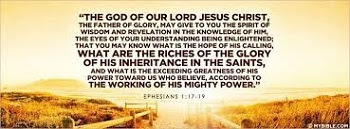
Colossians 1:27 To them God willed to make known what are the riches of the glory of this mystery among the Gentiles: which is Christ in you, the hope of glory.  Paul also prayed in Eph.1:17-19 that the :God of our Lord Jesus Christ, the Father of glory, may give to you the spirit of wisdom and revelation in the knowledge of Him, 18 the eyes of your [a]understanding being enlightened; that you may know what is the hope of His calling, what are the riches of the glory of His inheritance in the saints, 19 and what is the exceeding greatness of His power toward us who believe, according to the power of His mighty power.

Be Filled to the Measure of All the Full Fullness of God.

3. “To fully influence” – Edification fully influences the life of a believer.

4. “To fill with a certain quality” – The believer’s spiritual quality, his spiritual IQ and level of edification, are available to be used to provide a quality life. A quality life is characterized by: Faith-

Rest, Joy, Peace, a relaxed mental attitude, occupation with/in Christ, divine production of gold, silver, precious stones.

1 Cor. 3:11-13 For no one can lay a foundation other than that which is laid, which is Jesus Christ. Now if anyone builds on the foundation with gold, silver, precious stones, wood, hay, straw— each one’s work will become manifest, for the Day will disclose it, because it will be revealed by fire, and the fire will test what sort of work each one has done.

Symbols:


  • Gold- kingship, glory -Rev. 14:4; SS 5:11; Dan. 3:1; Matt. 2:11; Acts 17:29; Rev. 4:4; 9:7, 18:9-12 ,Mal. 3:3; Hag. 2:8.
  • Silver -Redemption-Lev. 5:15; Ps. 68:13;1Pet. 1:18- 20;

Matt. 27:3-9

  • Precious stones-Brilliant- In New Jerusalem, the Bride of Christ.Wood- human endeavor
  •  Hay-little worth
  • Straw- useless, worthless

The verb “filled” is in the subjunctive mood. This means that edification is not a given, it is potential. The tragedy here is that there are those who fade out rapidly.  

Example: Matt. 13;18, Mark 4:1-20, Luke 8:4-15-the parable of the sower, in which:


  1. The unbeliever by the wayside rejects the gospel.


  1. The person on rock soil has knowledge pushed out by suffering.


  1. Thorns refer to slavery to the details of life, resulting in no edification.


  1. But knowledge (GNOSIS) plus good soil.


A close up of a piece of paperDescription automatically generated


(FAITH) produce wisdom (EPIGNOSIS), and the production of divine good.

“with all the fulness of God” – the complete package – length, breadth, depth, height. As mentioned in the previous lesson this means:

  • Width- language used in shadowing forth the greatness, extent, and number of the blessings received from Christ,Length – of number and quantity, equivalent to numerous, large: ἀγέλη, Mark 5:11; abundant
  • Depth- thickness- fathomless-broad place- same word as used in Ps. 103:12 As far as the east is from the west, So far has He removed our transgressions from us.
  • Height- tank-your position in Christ.

FULLNESS. (Eph. 3:19) pleroma (play-row-mah); Strong’s #4138: Full number, full complement, full measure, copiousness, plenitude, that which has been completed. The word describes a ship with a full cargo and crew, and a town with no empty houses. Pleroma, strongly emphasizes fullness and completion.

Spiritual Leaders: Pray as Well as Teach (Eph. 3:14-21).

Spiritual leaders must pray for their people as well as teach them. Paul prayed that his fellow believers might know the strength of the Spirit’s reinforcement in the inner person, just as a storm-tossed ship on which he once sailed was strengthened inside by bracings and undergirded outside by cables (Acts 27:17).

Acts 27:17 When they had taken it on board, they used cables to undergird the ship; and fearing lest they should run aground on the [a]Syrtis Sands, they struck sail and so were driven.

Knowing that the strength of Christianity is not outward laws but inward character, Paul prayed that Christ might enter through the open door of faith, dwell in their hearts, and imprint His nature upon their minds, wills, and emotions. Christ brings His life—the very soil in which we take root and blossom, the ground in which our lives are founded. Prayers/Declarations beget prayer, for the believer in whom Christ’s love is bringing the fullness of God will learn to ask and expect great things from Him because everything has already been given us that pertain to life and godliness.

2 Peter 1:3 as His divine power has given to us all things that pertain to life and godliness, through the knowledge of Him who called us by glory and virtue,


We have not been called, chosen, redeemed and accepted because of our own merit – but by His glory, His goodness, His virtue and His grace and we are called to share in His glory and be clothed in His righteousness as children of God and joint-heirs with Christ.

Let us never forget that our heavenly position and privileges are ours in Christ Jesus Who, by His divine power has given us everything that is needed for life and godliness. And let us never forget that all that we are and all that we have is because of His glory, His goodness and His grace – Who laid aside His glory so that He could call us out of darkness into His marvelous light.

Again, knowledge (EPIGNOSIS)means to have wisdom in the “heart, the spirit man.” EPIGNOSIS (is a Greek word meaning precise and correct knowledge. It is used in the New Testament twenty times: fifteen times by the Apostle Paul, one time in Hebrews and four times by the Apostle Peter. 

That the God of our Lord Jesus Christ, the Father of glory, may give unto you the spirit of wisdom and revelation in the knowledge of him: (Eph. 1:17 KJV).

Epignosis produces practical results in our knowledge of God. For example, we may have an understanding (gnosis) of healing, but still be sick in our body. When you have epignosis of healing, you get healed! Get epignosis of the Father.


MEDITATE

What happens when epignosis is received? Declare that “I am growing in the epignosis of God, and coming into the fullness of the knowledge of my rights, privileges, and blessings in Christ”.

APPLY THE WORD

Epignosis is your key to unlock the treasures of grace in your life. Go for it. It is in the Scriptures, if you will allow the Spirit to give it to you!

PRAY/DECLARE- this knowledge with the Word of God

We will continue with Lesson 4 next week.  The blessings of the Lord are upon you whether by blood, adoption/sonship or assignment. The blessing of the LORD makes a person rich, and he adds no sorrow with it. Prov. 10:22

“WHERE Does Our Help Come From?” – Eva Windahl – 11/27/19

FS Wednesday’s Word of Power

“WHERE Does Our Help Come From?”

November 27, 2019

Eva Windahl

We have all been there.  SUDDENLY we are faced with the unthinkable.  We are thrown into a fiery storm of suffering or we find ourselves facing a gigantic problem. The question is what we do with it and from WHERE we expect to get help.  With this in mind and heart, I heard the Lord say: “Let My people CALL OUT TO ME! Remind them that I am the Lord who has made heaven and earth. I am still in control! I am not unaware of whatever you are facing but know this: I am sending help this very moment! Help is on its way to you, in My time and according to My will.” WHERE does our help come from? Let us have a closer look at Psalm 121:

I lift up my eyes to the mountains—
    where does my help come from?

2 My help comes from the Lord,
the Maker of heaven and earth.

3 He will not let your foot slip—
    he who watches over you will not slumber;

4 indeed, he who watches over Israel
will neither slumber nor sleep.

5 The Lord watches over you—
    the Lord is your shade at your right hand;

6 the sun will not harm you by day,
nor the moon by night.

7 The Lord will keep you from all harm—
    he will watch over your life;

8 the Lord will watch over your coming and going both now and forevermore.

FIRST, we have to LOOK UP to God because He loves us and can do the impossible! The sole source of ‘help’ comes from Yahweh, who, as Creator, has unlimited power.

SECONDLY, we should remind ourselves that God is always active, always accessible.  He never sleeps, He is always omnipresent. Therefore, we can feel safe knowing that whatever we are confronted with He already knows about it and is in control.

THIRDLY, as a good shepherd, Yeshua watches over His flock. His eyes and heart follow the sheep wherever they go, and he protects them from the attacks of the enemy. He watches out for you and your loved ones. And even though we sometimes ”walk through the [sunless] valley of the shadow of death, I fear no evil, for You are with me; Your rod [to protect] and Your staff [to guide], they comfort and console me.” (Psalm 23)

Finally, WHERE does our help come from? – My help comes from the Lord, the Maker of heaven and earth and with that in mind we are not alone.  We have God on our side.

Blessings  

THE TRUE STORY OF THANKSGIVING – DAVID MATHIS – 11/24/19

The True Story of Thanksgiving

By: David Mathis

Come Thanksgiving Day each year, many of us give the nod to Pilgrims and Indians and talk of making ready for a harsh first winter in the New World.

But for the Christian, the deepest roots of our thanksgiving go back to the Old World, way back before the Pilgrims, to a story as old as creation, with a two-millennia-old climax. It’s a story that keeps going right on into the present and gives meaning to our little lives, even when we’re a half a globe removed from history’s ground zero at a place called Golgotha.

You could call it the true story of thanksgiving — or you could call it the Christian gospel viewed through the lens of that often undervalued virtue known as “gratitude.” It opens up a few biblical texts we otherwise may be prone to downplay.

Here’s the true story of thanksgiving in four stages.

Created for Thanksgiving

First, God created humanity for gratitude. You exist to appreciate God. He created you to honor him by giving him thanks. Appreciating both who God is and his actions for us — in creating us and sustaining our lives — is fundamental to proper human life in God’s created world.

As he describes in Romans 1 what’s gone wrong with the world, the apostle Paul gives us this glimpse of the place of appreciation in the created order:

Although they knew God, they did not honor him as God or give thanks to him, but they became futile in their thinking, and their foolish hearts were darkened. (Romans 1:21)

Part of what the first man and woman were created to do was honor God by being thankful. And part of what we exist to do is honor God by being thankful — and thus the numerous biblical commands enjoining gratitude.

Humanity was created to appreciate God. But as we’ve already seen from Romans 1, ingratitude wasn’t far away.

Fallen from Thanksgiving

Second, we all have failed miserably in appreciating God as we should. In her book on gratitude, Ann Voskamp gives memorable expression to the failure of the first man and woman — and the devil before them — to rightly experience and express gratitude.

From all of our beginnings, we keep reliving the Garden story.

Satan, he wanted more. More power, more glory. Ultimately, in his essence, Satan is an ingrate. And he sinks his venom into the heart of Eden. Satan’s sin becomes the first sin of all humanity: the sin of ingratitude. Adam and Eve are, simply, painfully ungrateful for what God gave.

Isn’t that the catalyst of all my sin?

Our fall was, has always been, and always will be, that we aren’t satisfied in God and what He gives. We hunger for something more, something other. (One Thousand Gifts, 15)

Satan the ingrate spawns unthankfulness in Adam and Eve, who pass it along to all of us. Both before our conversion and after, we are unthankful people. This is so painfully true.

And we not only fail to be thankful like we ought, but we also fail to get the balance right between physical and spiritual. Two obstacles often stand in our way to God-exalting gratitude. You could call them “hyper spirituality” and “hyper physicality.”

Perhaps hyper physicality is all too well known in 21st-century Western society at large. A milieu of materialists is so unaware of spiritual reality that even when there is gratitude for the physical, the spiritual is neglected, if not outright rejected. We can be thankful for the temporal, even while we couldn’t care less about the eternal.

But hyper spirituality is often particularly dangerous among the so-called “spiritual” types, even in the church. We can be prone to mute God’s physical goodness to us out of fear that appreciation for such would somehow detract from our thanksgiving for spiritual blessings.

In our sin, we fail again and again to get the proportions right. Only with divine redemption are we able to grow toward a balance that goes something like this: Christians are thankful for all God’s gifts, especially his eternal gifts, and especially the surpassing value of knowing his Son (Philippians 3:8), the Spirit-become-physical.

Redeemed by Thanksgiving

Third, God himself, in the person of his Son, Jesus, entered into our thankless world, lived in flawless appreciation of his Father, and died on our behalf for our chronic ingratitude. It is Jesus, the God-man, who has manifested the perfect life of thankfulness. If you’ve ever tracked the texts where Jesus gives his Father thanks, you’ll know it’s quite an impressive list.

Matthew 11:25 [also Luke 10:21]: “At that time [note the context of unrepentant and unthankful “cities where most of his mighty works had been done,” verse 20] Jesus declared, ‘I thank you, Father, Lord of heaven and earth, that you have hidden these things from the wise and understanding and revealed them to little children; yes, Father, for such was your gracious will.’”

John 11:41: “ . . . they took away the stone. And Jesus lifted up his eyes and said, ‘Father, I thank you that you have heard me.’” [Jesus then raises Lazarus from the dead.]

Matthew 15:36 [also Mark 8:6]: Jesus “took the seven loaves and the fish, and having given thanks he broke them and gave them to the disciples . . . ” [See also John 6:11 and John 6:23 which refer to the location as “the place where they had eaten the bread after the Lord had given thanks.”]

Luke 22:17–20 [also Matthew 26:27 and Mark 14:23]: “He took a cup, and when he had given thanks he said, ‘Take this, and divide it among yourselves. For I tell you that from now on I will not drink of the fruit of the vine until the kingdom of God comes.’ And he took bread, and when he had given thanks, he broke it and gave it to them, saying, ‘This is my body, which is given for you. Do this in remembrance of me.’ And likewise the cup after they had eaten, saying, ‘This cup that is poured out for you is the new covenant in my blood.’” [And so following Jesus’s pattern, Paul in Acts 27:35 “took bread, and giving thanks to God in the presence of all he broke it . . . ”]

First Corinthians 11:23–24: Our “Lord Jesus on the night when he was betrayed took bread, and when he had given thanks, he broke it . . . ”

Jesus is not only God himself but also the quintessentially thankful human. The God-man not only died to forgive our failures in giving God the thanks he’s due, but also lived the perfect life of appreciation on our behalf toward his Father.

Freed for Thanksgiving

Finally, by faith in Jesus, we are redeemed from ingratitude and its just eternal penalty in hell, and freed to enjoy the pleasure of being doubly thankful for God’s favor toward us — not only as his creatures, but also as his redeemed.

It is fitting for a creature to be in a continuous posture of gratitude toward his Creator. And it is even more fitting for a redeemed rebel to be in an ongoing posture of gratitude toward his Redeemer. The kind of life that flows from such amazing grace is the life of continual thankfulness. This is the kind of life in which the born-again Christian is being continually renewed, progressively being made more like Jesus.

And so the apostle Paul encourages Christians to have lives characterized by thanksgiving.

Colossians 1:11–12: May you be “strengthened with all power, according to his glorious might, for all endurance and patience with joy, giving thanks to the Father, who has qualified you to share in the inheritance of the saints in light.”

Colossians 2:6–7: “as you received Christ Jesus the Lord, so walk in him, rooted and built up in him and established in the faith, just as you were taught, abounding in thanksgiving.”

Colossians 3:15–17 [note the hat trick (3x) in this one text]: “And let the peace of Christ rule in your hearts, to which indeed you were called in one body. And be thankful. Let the word of Christ dwell in you richly, teaching and admonishing one another in all wisdom, singing psalms and hymns and spiritual songs, with thankfulness in your hearts to God. And whatever you do, in word or deed, do everything in the name of the Lord Jesus, giving thanks to God the Father through him.”

Ephesians 5:20: “ . . . giving thanks always and for everything to God the Father in the name of our Lord Jesus Christ.”

1 Thessalonians 5:18: “Give thanks in all circumstances; for this is the will of God in Christ Jesus for you.”

Only in Jesus, the paragon of creaturely appreciation, are we able to become the kind of persistently thankful people God created us to be and fulfill the human destiny of thanksgiving. For the Christian, with both feet standing firmly in the good news of Jesus, there are possibilities for a true thanksgiving which we otherwise would never know.

EPHESIANS LESSON 4 (CHAPTER 3) – 11/23/19

LESSON 4- Ephesians

Chapter 3

The Mystery- Revelation

Our Inheritance in Christ Continued 

Chapter 3:1-21

Eph. 3:17 – that Christ may dwell in your hearts through faith; 

3:17 –  This will impact your faith with capacity to fully grasp the reality of the indwelling Christ. You are rooted and founded in Love.  Love is your invisible inner source just like the root system of a tree and the foundation of a building. (The dimension of your inner person exceeds any other measure that could possibly define you.) Mirror Translation

“through faith”

Belief in Christ is required. Belief in the Word of God is required. 

The process of maturing is as follows: 

1. God the Father provided the written revelation of His thinking. “We have the mind of Christ.” 1 Cor. 2:16

2. Communicators (5- fold leaders) teach the Word for the purpose of bringing us to maturity (Ephesians 4:11 to 16). (equipping) They activate, train and release or help put into application. The local church is the principal environment for learning doctrine, growing in grace and releasing those in the Great Commission. 

3. The Holy Spirit dwells in us. We are filled with the Spirit (spiritual), the Spirit teaches us and brings us to understanding of those things which are “spiritually discerned.” This understanding is GNOSIS, knowledge in the mind of the spirit (heart). Knowledge in the soul (mind) is temporal and subject to change. (head knowledge)

4. Once a principle of Scripture is understood, a believer has a choice, whether to adopt the teaching, believer the teaching, obey the teaching – in short, “faith” is required. Faith, in effect, causes the transfer of truth from the mind to the “heart”. Head knowledge becomes heart knowledge through the exercise of faith. Once an unbeliever understands the gospel, he must make a choice. Faith in the gospel brings about regeneration and all that is associated with it. By grace through faith are you saved. Eph. 2:8-9

When a Christian understands a Bible principle, a choice must be made. Faith in a promise brings about claiming the promise. Faith in a command brings about obedience to the command.

It is absolutely vital that you always stay positive to Bible truth. But here is where the spiritual tragedies occur. Believers who have heard Bible teaching and understand it through the ministry of the Holy Spirit, understand that revelation comes by knowing that the faith of God resides in you. Your spirit bears witness. 

5. Rom 8:16 The Spirit Himself bears witness with our spirit that we are children of God,

The “roots” of doctrine in the “heart” become part of the foundation and building that is growing in the believer’s soul (EPIGNOSIS). The “edifice” is in the process of construction. And a Biblical frame of reference is formed in which Bible truth becomes the basis for understanding deeper truth. Bible principles are stored in the heart to make a believer ready for any contingency which requires godly decision making or problem solving. 

6. Releasing into Ministry- an important step which is sadly missing in most churches or organizations.

The Great Commission is: Matthew 28: 18 – 20 –  And Jesus came and spoke to them, saying, “All authority has been given to Me in heaven and on earth. 19 Go [c]therefore and make disciples of all the nations, baptizing them in the name of the Father and of the Son and of the Holy Spirit, 20 teaching them to observe all things that I have commanded you; and lo, I am with you always, even to the end of the age.” 

7. Maturing into mature fathers and mothers. After being equipped and released (ongoing process) one matures int a mentoring position.  The Word teaches that both mothers and fathers are to exercise leadership in the nurture, training, discipline and teaching of their children (Exod. 20:12; Lev 19:3; Deut. 6:6-9, 21:18-21, 27:16; Prov 1:8, 6:20; Eph 6:1-4; Col 3:20; 2 Tim 1:5; see also Luke 2:51). It is the same with spiritual children.

1 Cor 4:15 For though you might have ten thousand instructors in Christ, yet you do not have many fathers (mothers); for in Christ Jesus I have begotten you through the gospel.

Eph.3:17b that you, being rooted and grounded in love,

“that you being rooted and grounded” “Rooted” is the perfect passive participle of RHIZOO, “to take root.” “Grounded” is the perfect passive participle of THEMELIOS, “to lay a foundation.” The perfect tense points to that teaching which resides permanently in the soul. That is the growing process, mind renewal process.

The passive voice shows that the believer receives the action of the verb, that it is God that plants and roots the doctrine. This activity is a Grace gift; the believer receives these benefits from the Lord. The participle indicates that this is a law of God.

“in love” – EN plus the instrumental of AGAPE. “By means of love.” Romans 5:5, Galatians 5:22.

Eph.3:18 may be able to comprehend with all the saints what is the width and length and depth and height—(of His love)

Next verse says: Eph. 3:19 “and to know the love of Christ that surpasses knowledge, that you may be filled with all the fullness of God.” 

3:18 This is your reservoir of super human strength which causes you as saints to collectively grasp (come to terms with, make one’s own) the limitless extent of His love in breadth, in length, in height (rank), and the extremities of its depths. Mirror

“to comprehend” – aorist middle infinitive of KATALAMBANO, “to seize; to lay ahold of. A believer has every grace opportunity to benefit fully from divine provision and strength. There is benefit from acquiring EPIGNOSIS, “full and applied knowledge” of Bible truth. The believer must wholeheartedly and forcefully “seize” truthful doctrine.

Paul then poetically notes the extent of God’s love, including every possible physical dimension. He used similar wording in Romans 8:38–39: “For I am sure that neither death nor life, nor angels nor rulers, nor things present nor things to come, nor powers, nor height nor depth, nor anything else in all creation, will be able to separate us from the love of God in Christ Jesus our Lord.” The Old Testament often used “height and depth” regarding measurements. Paul used these figurative terms in relationship to God’s love that cannot be measured, though believers can grow in their understanding of God’s love.

Width – language used in shadowing forth the greatness, extent, and number of the blessings received from Christ.​

Length – of number and quantity, equivalent to numerous, large: ἀγέλη,  Mark 5:11; abundant

Depth – thickness- fathomless-broad place- same word as used in Ps. 103:12 As far as the east is from the west, So far has He removed our transgressions from us.

Height – rank – your position in Christ

This is Paul’s constant prayer.

John 8:32 And you shall know the truth, and the truth (that you know) shall make you free.

We will continue with Lesson 4 next week.

The blessings of the Lord are upon you whether by blood, adoption/sonship or assignment. The blessing of the LORD makes a person rich, and he adds no sorrow with it. Prov. 10:22
GOD HAS NOT ABANDONED YOU – ERIK RAYMOND-11/17/19

God Has Not Abandoned You

By: Erik Raymond


Hardship is almost as common as breathing. The question is not if but when we will find ourselves in one of the painful pits of life.


At the same time, trials come with uncertainty. How intense will it be? How long will it last? This is why the counsel of well-meaning friends is often met with a bit of a grimace. When they say, You’ll be okay, we want to believe it. But if we are honest, we just don’t know it’s true.


But what if there was something to cling to? Better, what if there was someone to fasten our hope on? The Bible teaches us that God not only offers us encouragement when we’re in a difficult pit, but he actually enters into the pit with us to see us through. We really will be okay, because God is with us.

Joseph in the Pits

Imagine the emotional vice Joseph must have endured. After his brothers beat him and sold him to human traffickers, Joseph watched as another painful deal was made. The Ishmaelites sold him to an Egyptian (Genesis 37:36). Separated from his family and his homeland, Joseph would’ve felt alone. This is a surprising place for a man born into a family enveloped in promises, most notably of the closeness of God.


Now he is in a foreign land, cut off from his family, and — it would seem — drifting away from the shoreline of God’s blessings. Joseph is in a pit, and he seems to be very much alone. The writer of Genesis wants us to see and feel the bleakness, if only to show us God’s purpose in it.

God’s Purpose in the Pits

We might be tempted to conclude from his circumstances that God was either angry with Joseph or had abandoned him altogether. Likewise, when we encounter difficulty, we may think that God has disappeared, or that he is displeased with us.

But what if the trials were intended to reveal something else? What if God means to show us the preciousness of his love, while strengthening our faith? Later in the story, we read these words: “The Lord was with Joseph” (Genesis 39:2). God had not abandoned him in the pit. Far from it. God was actually with him.


What’s more, God was doing something with him. This pit was purposeful, not pointless. We are instructed throughout the Bible not to dismiss personal hardship as something bad. Instead, with eyes of faith, we are to see beneath the surface, where God is making us more like himself. James instructs believers to joyfully embrace these trials because they are providentially used to strengthen our faith and make us mature (James 1:2–4).

How God Gives Humility

The psalmist reminds us that God used affliction as a tool to make him obedient (Psalm 119:67).


In Joseph’s life, we see God working this type of change into him. Reading through the Joseph narrative, we are struck by the moral compass of this man. But where did he receive his training? How did God work in him the humility that trembles before God and clings to his promises? Let’s remember that it was the younger Joseph who not only lacked considerable tact, but also humility, when talking to his brothers about dreams (Genesis 37:1–11). God humbled him through these trials. But not only did God humble Joseph, he also showed him the preciousness of divine love and faithfulness in real time (Genesis 39:21–23).

Far from being abandoned by God in a pointless pit, Joseph was actually right where God wanted him. It was here in this surprising station that God worked to change Joseph, even as he cheered him with his nearness.

God Is with You

When we read through and consider the life of a man like Joseph, we’re not watching another powerful documentary on Netflix. Sure, there are facts and details to observe about that time and culture. But there is much to apply to our own lives. As believers, we are clinging to the same God who speaks to us through his word and promises to work through our circumstances for his glory and our good (Romans 8:28).


Consider how powerful this truth really is. There is nothing random about your life. Every hand is dealt by divine providence. Every circumstance we find ourselves in — whether good or bad — is actually working together for our everlasting good. The difficulties are not pointless but purposeful. God is making us more like himself by them and through them.

But God is not only changing us through this. God is also with us through this. He enters into our struggles. He cheers us with his presence, shows us kindness, sympathizes with our weakness, and refreshes us with his word. We never sink lower than Christ can descend. We can never outrun his loving sovereignty. He joins us in the pit, to give us more of himself.

Whatever Pit You’re In

What can help the one who cannot cry another tear? What consoles you when there are no other medical options? How can you be comforted when relationships are shattered? Who can you turn to when many falsely accuse you? How can you be strengthened to stand when tragedy has buckled your knees?

When the trials of life feel like they have you rushing uncontrollably down a river of despair, cling to the presence and purposefulness of God. This is not an accident, and you are not alone. You are not abandoned. God is with you in this pit, for his glory and your good.


FS WEDNESDAY’S WORD OF POWER – JUST ONE WORD – 11/13/19

FS Wednesday’s Word of Power

“Just One Word”

November 13, 2019

Eva Windahl


There was something about the way Yeshua spoke. There was something about His words! Just ONE WORD had a tremendous impact and with only ONE WORD the blind were healed, the lame would walk, and the demon possessed were set free!

The words of Yeshua are life changing and timeless. When Yeshua spoke, His words had remarkable power. Whether you are just beginning to seek Jesus or have been a believer for years, the Word of God can always speak new truths into your life!

No wonder people were mesmerized by His teachings!  In Matt. 7:28-29 we read: “And it came to pass, when He had ended these sayings, the people were astonished at His doctrine: for He taught them as having authority, and not as the scribes.”

The apostle John describes Yeshua in John 1:1-4 “In the beginning was the Word, and the Word was with God, and the Word was God. 2 He was in the beginning with God. 3 All things were made through Him, and without Him nothing was made that was made. 4 In Him was life, and the life was the light of men.”

Yeshua is the living Word of God and He is God, therefore when He spoke, His words were not like any other! His word carried God´s supernatural power! Let me encourage you: God is alive and powerful today! When we are down and in need of strength, I believe God wants to remind us today to speak out and proclaim His word! When we speak His word in faith -miracles can happen!

Too often we choose to complain and to confirm the negative instead of using God´s word to focus on the positive: “I can do ALL things through Christ who strengthens me” (Phil 4:13). Proclaiming God´s promises is the only way to transform our circumstances! My children often remind me by saying: “Mom, you promised! You promised we would get ice cream after dinner!” and after a few minutes I usually reply: “Ok, ok – if I have promised, so be it…” I believe God loves to be reminded of His promises because it reflects our faith in him!

Like the miracle of the healing of the nobleman’s son (John 4:46-54), the healing of the centurion’s servant (Matthew 8:5-13; Luke 7:1-10) reveals Christ being able to heal from a distance merely by the power of His word. Because of his experience as a commander, the centurion knew that it was not necessary for Jesus to come to his home to visit the sick servant and pray while standing over the afflicted. Then, as now, distance is not a factor in Christ’s ability to heal; His word is sufficient whether near or far.

True faith requires no visible sign. The centurion’s faith was in the spiritual capability of Christ; he had confidence in the effectiveness of Christ’s word to heal the sick and dying. As a man of authority, he believed and understood that diseases had to obey Jesus’ command just as his men had to obey him as their superior officer. He knew that authority transcended distance. An officer need not be personally present to command his soldiers to carry out his orders. It was sufficient for Christ to exercise His will through His word, and it is done.

There is POWER in His word! Thank you, Lord, for speaking into our situation and sending your word! Lord, open our heart to receive your word for our lives today. In the name of Yeshua. Amen!

WHEN YOU CAN’T HEAR GOD, KEEP TALKING TO HIM – DAVE ZULEGER -11/10/19

When You Can’t Hear God, Keep Talking to Him

By: Dave Zuleger

Our world is filled with sin and suffering, the kind of pain and darkness that creeps into every single heart and life. There’s no way around it. Following Jesus will rescue us from a thousand evils, but it will not keep us from getting hurt in this life.

If we know him, we know deep down that these sufferings highlight our dependence (2 Corinthians 1:8–9) and help us comfort others with the very comfort of Christ as we share in his sufferings (2 Corinthians 1:3–7). We know that God’s strength is made perfect in our weakness, and we even know the deep feeling of being “well pleased” with our weakness because of that reality (2 Corinthians 12:10). We know that our trials will produce a faith that is tested, refined, and full of glorified joy (1 Peter 1:6–7). We know deep realities that can create deep hope beneath even the deepest pain.

Except sometimes we don’t.

Sometimes we preach these truths to ourselves and our hearts aren’t moved at all. We groan, and wish that life was so different than it is (Romans 8:23). We pray and pray and pray, and things only seem to get more overwhelming and more difficult. Sometimes our hearts simply ache with the pain of broken dreams, broken relationships, broken bodies, and broken sinfulness.


Have you had that experience? Hope doesn’t come. Happiness doesn’t flood your heart. The clouds of depression don’t blow away. Overwhelming struggles simply overwhelm you more. Relationships are not restored. What can we do?

Get It Together?

Sometimes we heap harmful expectations on one another on top of already painful circumstances. Few things are more prized than “having it all together.” Even in Christian circles, there is a subtle undercurrent that we must always have glimmering hope just above the dirt of despair.

In Psalm 88, the authors begin by stating, “O Lord, God of my salvation,” but that first verse is the last note of hope in the Psalm. There is only lament after those six words. Now, of course there are questions, like the one in Psalm 88:10, that if answered correctly would flood our hearts with hope. But the psalmists aren’t there yet. They are only asking the hard questions.

Keep Talking

How do we grieve like Psalm 88 — without minimizing our pain, and without losing our hope?

First, I think that the normal experience of life in Christ will be one that is sorrowful and rejoicing, (2 Corinthians 6:10) — gospel-hope brimming and broken-work despairing, side by side each day until Jesus returns. We should expect suffering, and preach to ourselves that the deep gospel truth shines through it, and even in it.

Second, sometimes we go through seasons of more overwhelming struggle than overwhelming hope. Life is overwhelming. It seems like too much. It seems like God is piling it on (Job 3). My advice is to follow the example in Psalm 88 and keep talking to your Savior — even when you’re not ready to recite all the right answers just yet.

Tell him you trust him, but that you need him to help your current unbelief (Mark 9:24). Sometimes it’s the repeated hard conversations with God that eventually bring the breakthrough to the intimacy and help we desperately need. Don’t load on yourself the extra burden of “being okay.” Lay that weight aside and look to Jesus (Hebrews 12:1–3), casting all your cares on him. Be honest with God. He can handle it. And he cares for you (1 Peter 5:7)!

Third, let’s be honest and compassionate with each other. Let’s be quick to sit with people and cry with people (Romans 12:15), and be eager to bear one another’s burdens together (Galatians 6:2). One of the surprising ways God comforts his people is through the comfort of other believers who have also struggled and can relate (2 Corinthians 1:3–11).

Tell God Your Troubles

When life feels like too much, tell God. When it feels like God isn’t close, tell God. When it feels like you can’t go on, tell God. When it feels like the pain won’t ever stop, tell God. When it feels like you want to give up on things, tell God. When it feels bleak and dark and no rays of light are breaking through, tell God.

He is your Savior. That won’t change. And even when it doesn’t feel like it, he is listening.

And then, find a few members of the blood-bought family of Christ, and tell them, too. We are meant to bear one another’s burdens. Take off the mask. Take off the social media façade. And let people into your life so they can extend to you the comfort of Christ and help you bear whatever unique discomfort you are bearing today — physical, relational, spiritual, or otherwise.

God will help you — through prayer as you seek him, through his promises as you read them, and through his people as you draw them closer into your life.